
Everything is Gift
Frost Farm Poetry Prize 2026: a surprising bit of news

My phone rang yesterday, and it was from a number that was not in my contacts. I almost ignored it, because I have had so many spam calls pestering me lately. But the caller-id labeled the number “Robert Crawford,” and though I was in the midst of making lunch for my littles and figuring out what my middle schooler’s next Latin assignment should be, that name seemed to touch a vague memory in the back of my mind, so I figured I’d better pick up. A few minutes later, speechless with shock, I was pretty glad I had.
The news that Bob Crawford was bearing on the phone was this: I was the winner of the 2026 Frost Farm Prize for metrical poetry for my poem “The Absences are Different.” You can see the official announcement, and read the poem here. (I quickly realized that I recalled Bob’s name because he is the co-founder and organizer of the yearly Frost Farm Poetry Conference!) I can only assume that many of the poems entered for this prize came from the excellent, painstaking poets who have taught me and inspired me over the years, and whose work I very much admire. I repeat, upon hearing the news—I was shocked. Just go check out the amazing group of finalists and and honorable mentions: Alice Allan, Maya Venters, James Matthew Wilson, Cara Valle, Ben Myers, Steven Searcy, Blake Campbell, Steven Monte, Benjamin Rose, and Olivia Marstall… a great crowd.
About “The Absences are Different,” I can say this: from the beginning of my poetry education, I’ve been taught that authors need to let their poems “be what they are.” In other words, if authorial interpretation is required for the poem to work when it is out in the wilds of the world, it probably needs some revision. Once written and released, the poem becomes a thing for-another, and it is no longer, to a great extent, mine. Thus, there’s really not much that I ought say about my poem, but I wanted to share the thoughtful and generous discussion of my poem that came from this year’s contest judge, Mr. Ryan Wilson, who personally read every single one of the 600+ poems that were sent in anonymously for this contest. (Having just judged a much smaller poetry contest myself this year, I can attest to the sacrifice and commitment that it takes to read such a huge pile of poems, especially with the careful consideration that is required for judging a contest.)
Mr. Wilson writes:
“The Absences are Different” is a poem, paradoxically, about presences, specifically the presence of “such fleeting things” as hummingbirds, empty cups, tides, and memories. Comprised of six sentences—three indicative, two imperative, and a final indicative—the poem is not at all the straightforward piece of advice that such an arrangement might suggest. Rather, it is alive with verticality and verges on the Baroque with its elegant sestets—arranged 3A 5B 4A 3C 4B 5C—through which a fluent syntax cascades in such a way as to recall Donne, Herbert, and, perhaps more fully, Thomas Traherne, and yet the poem never feels archaic, or “old-timey,” but remains tenaciously grounded in our present.
Consider the first sestet, the music of which is exquisite. Dominated by liquid consonants, and especially the nasal “n,” in imitation of the “whirring wings” of the “hummingbird” (the reader may appreciate how both the “m” and “n” sounds in “hummingbird” actually force the one saying the poem aloud to “hum” through the nose), this sestet conjures the metaphysical through the physical. When the poet asserts that “The space that curves around / a hummingbird is always tinged with green,” the reader assents to the statement as literally true: we’ve all seen hummingbirds in the green of flowering bushes. But there is also a delicate metaphysical suggestion: namely, “the space that curves around” any mortal thing is always, in a certain sense, “green,” always alive with suggestions and recollections, “the befores and afters of such fleeting things.”
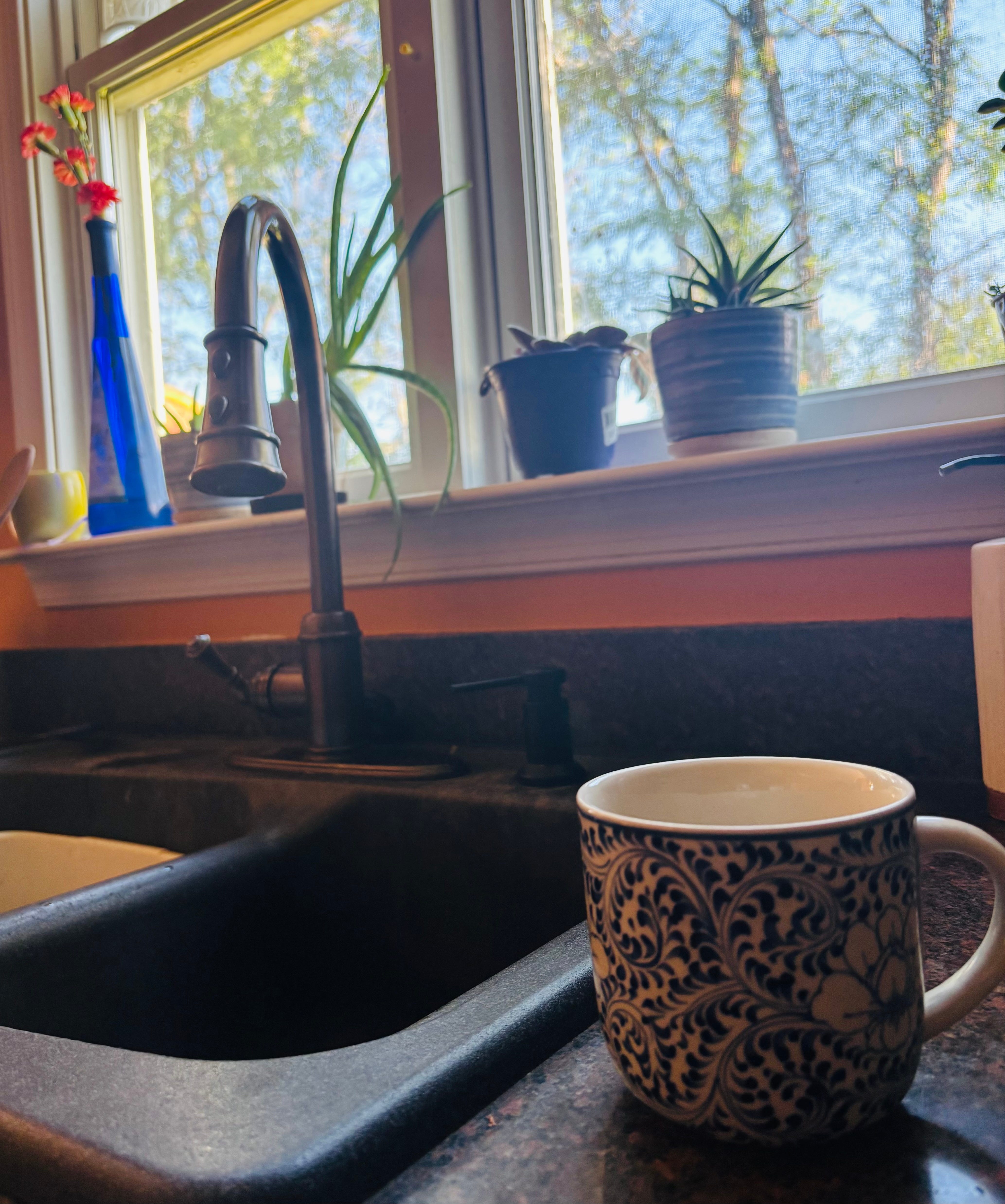
Indeed, this poem is haunted with a “quiet resonance,” or, rather, several quiet resonances. First, upon encountering the word “hummingbird” and “resonance” so near each other, the reader cannot help but hear a “resonance” of Emily Dickinson’s late masterpiece, poem 1463 (“A route of evanescence”). In Dickinson’s poem, the local hummingbird brings “the mail from Tunis,” news of another world. Similarly, in “The Absences are Different,” the hummingbird brings news from other worlds, news of “footprints lost beneath a rising tide, / of pickets missing from a fence, / of houses left half-bare, / of empty cups set down beside / a sink, and a snap of wood in cooling air …”.
Via the mind’s poetic associations, the present hummingbird with its swift movements inaugurates a society of memories and imaginings that move from here to there with lightning speed in the poem’s litany.
To note these swift transformations is to recall the musical modulation in stanza one, from “hummingbird” to “tinged” to “blurring” and “whirring” and “wings” and “fleeting,” with sonic variations in “green” and “skin” and “thin” and “between.” Moreover, noting these transformations, one also recalls that, behind Donne and Herbert and Traherne, lie Ovid and his Metamorphoses, adumbrated in the Ars Amatoria, two of the most impactful poems upon the Renaissance, the latter, especially, because it showed how love joins discrete entities into a unity.
In “The Absences are Different,” we see such a jointure: past and present are joined both literally and stylistically. And yet, the poem is neither mawkish, nor unduly neo-Classical. In stanza three, the poet writes, “Trials, or solitude, can teach a dumb / affection for what isn’t there, / for fullness ringing through / a vacant room.” There’s a hint of self-mockery in the Janus-word “dumb” (here meaning “silent” but also self-deprecatingly suggesting “stupid”) and in the “vacant room,” as any poet so savvy in imitation of stanzas recalling Donne would recall that a “vacant room” suggests a “vacant stanza.” (I’d be remiss not to note how the sound the poet has associated with the hummingbird comes back triumphantly in the phrase “fullness ringing” quoted above.)
In short, the poem is, for all its high polish, not at all hoity-toity. It confronts how the human mind can furnish the apparently blank or empty, can supplement what is given in each now with what has been taken from each now. Consequently, we’re instructed, “Don’t envy water, cleft / by fish, or clouds that barely blur / when pierced by bird or plane.” Why should we envy such things, through which what passes leaves only a brief mark. What passes through our lives can remain present to us, most especially our “loves,” this last a word which the poet has, in a feat of anagrammatic brilliance, dissolved in the word “dissolves.” For us, love may not dissolve in the transformation of all things, but may remain present with us, even when the beloved is gone, as all created things, such as hummingbirds and humans, will soon enough be.
Ultimately, “The Absences are Different” may recall Traherne, and Donne, and Dickinson, and Ovid, but its doing so is not empty show: the literary “resonance” embodies the poem’s argument, which is similar to that of Richard Wilbur’s fine late poem, “At Moorditch.” And, as Mr. Wilbur’s poems so often did, “The Absences are Different” offers a startling illumination of how presence itself is a lasting gift.
When I got the news, I was already planning to attend the Frost Farm Poetry Conference in August, up in the New Hampshire stomping grounds of Robert Frost, as I did last year. This year there will be a little extra excitement for me, as I’ll have the honor of offering a short reading on the opening evening of the conference. (Poets, especially formalists, it’s a great time, and you should join us—you can read about last year’s conference in this exuberant post from my friend Zina.)
If you’re still reading at this point, I’ll share that Bob asked for my “reaction” to the news about the Frost Farm Prize. Words failed me, for the most part, but here’s what I managed to express.
Everything is gift—this is a phrase etched into the headstone of a dear mentor of mine who passed away a few years ago. When I consider the news that I have won the 2026 Frost Farm Prize for metrical poetry, these words come immediately to mind. There are so many gifts, and gift-givers, hovering in the background of “The Absences are Different” that it boggles my mind to think of them all. The most immediate gift that spurred the writing of this poem was a book suggestion: I was in the middle of following up on it, muddling my way through a text on phenomenology, when I came across the phrase that became the poem's title. But there are other, wider gifts at work, so many that it is impossible to list them all right here. For now I will just say that it was a gift to have the time and inspiration to write this poem, and a gift to be taught how. It is also a profound gift to be part of a growing community of poets who inspire me to persevere in the basics of reading, thinking, and writing.
For all of this and more, I am both humbled and grateful.
~Carla Galdo
Gooooooo Carla!! What a fantastic poem!
Congratulations!!! Wonderful news, Carla!